


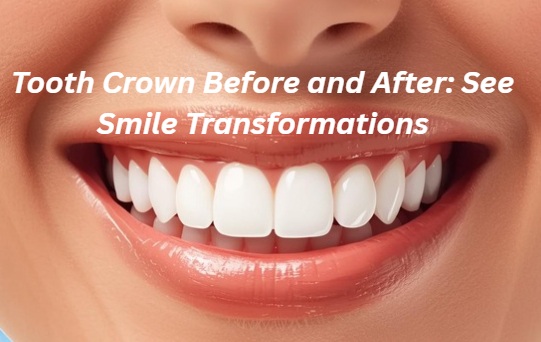
A smile is one of the first things people notice. But what happens when your teeth are chipped, cracked, or discolored? Damage or decay can affect not only your oral health but also your confidence. Fortunately, modern cosmetic dentistry offers a reliable and effective solution: the dental crown. Looking at tooth crown before and after transformations reveals just how powerful this restorative treatment can be. It’s more than just a repair; it’s a full restoration of function and aesthetics.
- What is a Dental Crown and Why Might You Need One?
- The Transformation: Real Tooth Crown Before and After Scenarios
- Case Study 1: Restoring a Single Cracked Front Tooth
- Case Study 2: Full Mouth Restoration for Worn-Down Teeth
- Case Study 3: Covering Discolored Teeth
- Materials Matter: Porcelain vs. All-Ceramic Crowns
- The Dental Crown Procedure: A Step-by-Step Overview
- Combining Treatments for a Complete Smile Makeover
This guide explores the incredible changes possible with dental crowns. We will look at what they are, the problems they solve, and the different materials used, like porcelain and all-ceramic crowns. By understanding the process and seeing real-world results, you can decide if a tooth crown is the right step toward revitalizing your smile. This procedure can truly transform your dental appearance.
What is a Dental Crown and Why Might You Need One?
A dental crown is a custom-fitted cap that is placed over a damaged tooth. Think of it as a helmet that protects and strengthens the underlying tooth structure. A dentist prepares the original tooth and then bonds the crown securely over it, restoring its original shape, size, strength, and appearance. The goal is for the crown to blend seamlessly with your surrounding natural teeth.
Common Reasons for Getting a Crown
You might be a candidate for a dental crown for various reasons, ranging from cosmetic enhancements to essential restorative care.
- To Protect a Weak Tooth: A tooth weakened by decay or a large filling might be at risk of breaking. A crown can hold it together and strengthen it.
- To Restore a Broken or Worn-Down Tooth: Severe wear from grinding or a sudden accident can leave a tooth fractured. A crown can cover the broken tooth and restore its complete form.
- To Cover a Tooth with a Large Filling: When there isn’t much of the original tooth left, a crown provides better support than another filling.
- To Hold a Dental Bridge in Place: Crowns are placed on adjacent teeth to anchor a dental bridge, which is used to replace missing teeth.
- To Cover a Dental Implant: An implant crown is the final component of a dental implant, serving as the new, functional tooth.
- For Cosmetic Modification: Dental crowns can resolve numerous cosmetic issues. They can cover a severely discolored tooth that doesn’t respond to teeth whitening, correct a misshapen tooth, or even help fix an overbite. The tooth crown before and after difference is often most dramatic in these cases.
Signs You Might Need a Crown
If you experience any of the following, it might be time for a consultation with your dentist:
- A large, visible crack or chip in a tooth.
- Pain when biting down.
- Extreme sensitivity to hot or cold.
- A large, old filling that feels loose.
- Significant discoloration on a single tooth.
The Transformation: Real Tooth Crown Before and After Scenarios
The most compelling way to understand the impact of dental crowns is to see the results. Before and after photos from a patient gallery showcase the dramatic improvements in both oral health and aesthetics.
Case Study 1: Restoring a Single Cracked Front Tooth
A common scenario involves a cracked front tooth. Before the treatment, the patient may have a visible fracture line that makes them self-conscious about their smile. The crack can also be a pathway for bacteria, leading to further decay.
After the procedure, a custom-made all-ceramic crown is placed over the prepared tooth. The new crown perfectly matches the color and shape of the surrounding teeth, making the restoration completely natural-looking. The tooth is not only repaired but also significantly strengthened, allowing the patient to eat and smile with confidence. This is a perfect example of a tooth crown before and after success story.
Case Study 2: Full Mouth Restoration for Worn-Down Teeth
Years of grinding can cause teeth to become short and flat. Before treatment, a patient’s smile might look aged, and they may experience jaw pain or difficulty chewing. This is a problem of both function and aesthetics.
A full mouth restoration can involve placing several crowns on both the upper teeth and lower teeth. A prosthodontist or cosmetic dentist will design crowns that restore the proper height and biting surface. After the restoration, the patient has a more youthful and vibrant smile. The before and after difference is staggering, showcasing a complete overhaul of the dental structure. Often, this includes a combination of 10 or 12 porcelain crowns and sometimes veneers on the front teeth.
Case Study 3: Covering Discolored Teeth
Sometimes, a single tooth can become dark due to trauma or a previous root canal. This discolored tooth can stand out and disrupt the harmony of a smile. Teeth whitening treatments may not be effective in these cases.
A porcelain crown is an excellent solution. The dentist will select a shade that matches the adjacent teeth. After the crown is placed, the dark tooth is completely hidden, and the smile appears uniform and bright. This demonstrates how a tooth crown can provide a predictable and lasting cosmetic fix.
Materials Matter: Porcelain vs. All-Ceramic Crowns
The material used for your crown plays a huge role in the final look and feel. Porcelain and ceramic materials are popular choices for their lifelike appearance.
| Material Type | Advantages | Best For |
| All-Porcelain/All-Ceramic | Most natural and beautiful appearance; excellent light translucency; biocompatible; great for people with metal allergies. | Front teeth restorations where aesthetics are the top priority. |
| Porcelain-Fused-to-Metal (PFM) | Strong and durable due to the metal core; good aesthetic qualities from the porcelain overlay. | Back teeth that endure heavy chewing forces; can be used for bridges. |
| Zirconia | Extremely strong and durable; can be layered with porcelain for better aesthetics; resists chipping. | Molar crowns, implant crowns, and long-span bridges. |
| Gold and Metal Alloys | Highly durable and long-lasting; requires less tooth removal; gentle on opposing teeth. | Back teeth (molars) where strength is more important than appearance. |
For those seeking the ultimate tooth crown before and after transformation, all-ceramic crowns are often the top recommendation from cosmetic dentists. They mimic the look of natural tooth enamel better than any other material, ensuring your restoration is undetectable.
The Dental Crown Procedure: A Step-by-Step Overview
Getting a dental crown typically requires two appointments. The process is straightforward and carefully planned to ensure a perfect fit and a beautiful result.
The First Appointment: Preparation and Temporary Crown
- Consultation and Examination: Your dentist will examine your tooth to ensure a crown is the best solution. This may involve X-rays.
- Tooth Preparation: The tooth is numbed, and then the dentist will reshape it by removing a small amount of enamel from the top and sides. This makes room for the crown to fit over it.
- Taking an Impression: An impression (or a digital scan) is taken of the prepared tooth and the surrounding teeth. This mold is sent to a dental lab where your custom-made crown will be fabricated. Your dentist will also choose a shade to match your other teeth.
- Placing a Temporary Crown: A temporary crown is placed over your prepared tooth to protect it while the permanent one is being made. This process takes about two to three weeks.
The Second Appointment: Placing the Permanent Crown
- Removing the Temporary Crown: The temporary crown is removed, and the tooth is cleaned.
- Fitting the Permanent Crown: Your dentist will place the new permanent crown on your tooth to check the fit, shape, and color. Minor adjustments may be made.
- Bonding the Crown: Once you and your dentist are happy with the fit and appearance, the crown is permanently cemented or bonded into place.
Your new tooth crown will feel and function just like a natural tooth.
Combining Treatments for a Complete Smile Makeover
In many tooth crown before and after galleries, you’ll notice that crowns are often part of a larger treatment plan. To achieve a truly transformative smile, dentists may combine several procedures.
- Crowns and Veneers: Crowns are used to restore severely damaged teeth, while porcelain veneers (thin shells bonded to the front of teeth) are used to improve the appearance of less damaged front teeth. This combination can correct issues like gaps or black triangles between teeth.
- Crowns and Bridges: To replace one or more missing teeth, a dental bridge uses crowns on the teeth adjacent to the gap as anchors for the replacement tooth.
- Crowns and Teeth Whitening: Before getting a crown, many patients opt for teeth whitening. This allows the dentist to match the new crown to a brighter, whiter shade, enhancing the entire smile.
- Crowns and Gum Shaping: Sometimes, cosmetic gum shaping is performed to create a more even gum line before crowns are placed, framing the new teeth beautifully.
These combined approaches allow for a comprehensive restoration that addresses all of a patient’s concerns, leading to a healthy, functional, and aesthetically pleasing outcome.
Frequently Asked Questions (FAQs)
- How long do dental crowns last?
A dental crown can last anywhere from 5 to 15 years, or even longer. The lifespan depends on the material used, your oral hygiene habits, and whether you grind your teeth. Porcelain crowns are very durable, but avoiding hard foods and wearing a nightguard if you clench your jaw can extend their life. - Is getting a dental crown painful?
The procedure itself is not painful. Your dentist will use a local anesthetic to numb the tooth and surrounding area before preparing it. You might feel some mild sensitivity or gum tenderness for a few days after the procedure, but this is temporary and can be managed with over-the-counter pain relievers. - How do I care for my dental crown?
You should care for a crowned tooth just as you would your natural teeth. This includes brushing twice a day, flossing daily (paying special attention to the area where the gum meets the crown), and visiting your dentist for regular check-ups and cleanings. While the crown itself cannot decay, the underlying tooth can still develop cavities at the gumline. - Can a dental crown be whitened?
No, dental crowns and veneers cannot be whitened with traditional teeth whitening products. The materials used, such as porcelain or ceramic, do not respond to bleaching agents. If you want a whiter smile, it is best to have a teeth whitening treatment done before your crown is made so the crown can be matched to your newly brightened teeth.
5. What is the difference between a crown and a veneer?
A crown covers the entire tooth, restoring its shape and strength, making it ideal for a broken, decayed, or weak tooth. A veneer is a much thinner shell that only covers the front surface of the tooth. Veneers are purely cosmetic and are used to fix issues like stains, small gaps, or minor chips on otherwise healthy front teeth.