


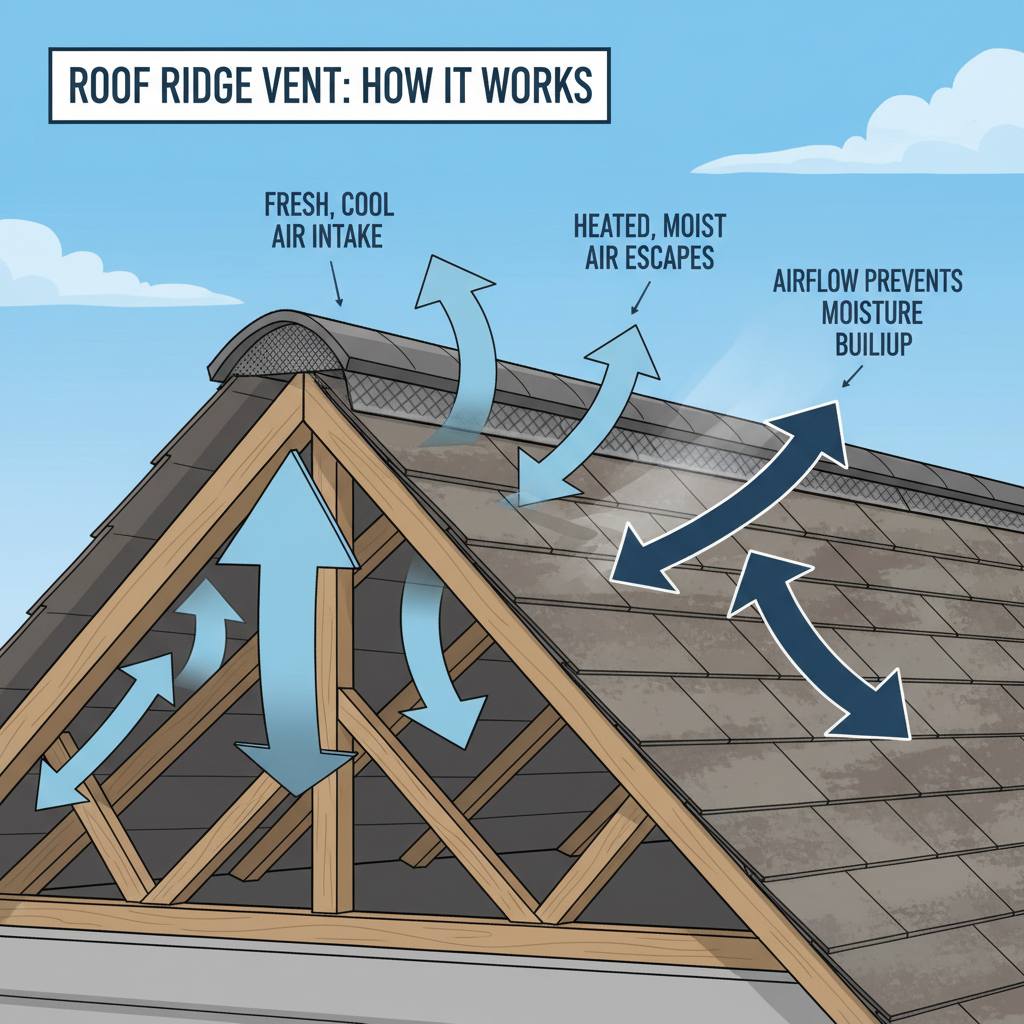
Maintaining a healthy home starts at the very top. A roof ridge vent plays a vital role in keeping your house safe, comfortable, and structurally sound. Many homeowners overlook the space right above their ceilings, but proper airflow in this area dictates how well your entire roofing system performs throughout the year. We want to help you understand exactly why this component matters so much.
When you trap heat and moisture inside a house, bad things happen. Wood rots, mold grows, and cooling bills skyrocket. A roof ridge vent solves these problems by allowing trapped air to escape naturally. This guide breaks down everything you need to know about these essential components, from their core benefits to the installation process. You will learn how to identify different types of vents, avoid common installation mistakes, and ultimately protect your property.
What is a Roof Ridge Vent?
A roof ridge vent is an exhaust vent installed continuously along the horizontal peak of a sloped roof. Builders and roofers cut a specific slot into the roof deck right at the roof peak. They then place the vent over this slot to allow warm, moist air to escape from the attic space to the outside. Because warm air naturally rises, this placement at the absolute highest point of the house is highly effective.
This venting system works alongside soffit vents, which are located at the lower edges of the roof overhangs. Fresh, cool air enters through the soffit vents, pushes into the attic, and forces the hot, stale air up and out through the roof ridge vent. We call this a passive ventilation system because it relies on thermal convection and wind pressure rather than electricity or moving parts.
Once installed, the vent is usually covered by ridge cap shingles. These special shingles blend the vent into the rest of the roof, making it nearly invisible from the ground. This creates a clean, uniform look while providing continuous, uniform exhaust across the entire length of your house. By maintaining this constant flow of air, you ensure your attic breathes properly, regardless of the season.
Benefits of Roof Ridge Vents
Installing a roof ridge vent offers massive advantages for your property. A balanced system protects your investment and keeps your living spaces comfortable. Let us explore the primary benefits in detail.
Improved Attic Ventilation
Effective attic ventilation requires a constant, uninterrupted flow of air. Traditional box vents or gable vents only pull air from specific localized areas, leaving stagnant pockets of air in the corners of your attic. A continuous roof ridge vent eliminates these dead zones. Because it runs along the entire roof peak, it exhausts air evenly from every part of the attic space.
During the summer, the sun beats down on your shingles, turning your attic into an oven. Temperatures can easily exceed 140 degrees Fahrenheit. The roof ridge vent allows this intense heat to vent out immediately. In the winter, normal household activities like cooking, showering, and doing laundry generate moisture that rises into the attic. Without proper attic ventilation, this moisture condenses on cold wood framing, leading to mold, mildew, and structural rot. The vent allows this humid air to exit safely before it causes trouble.
Energy Efficiency
We all want to lower our monthly utility bills, and energy efficiency is a major benefit of upgrading your roof’s airflow. When extreme heat builds up in your attic during the summer, that heat eventually radiates down through your ceiling insulation and into your living spaces. Your air conditioning system then has to work overtime to keep your house cool.
By utilizing a roof ridge vent, you continuously flush that superheated air out of the building. This lowers the overall temperature of your attic, which in turn reduces the thermal load on your air conditioner. The result is true energy efficiency: your cooling system runs less frequently, consumes less electricity, and experiences less wear and tear. Over time, the savings on your energy bills can help offset the cost of the roofing materials and installation.
Prevention of Roof Damage
A poorly ventilated roof is highly susceptible to premature aging and catastrophic damage. When attic temperatures soar, the underlying heat literally bakes your asphalt shingles from the inside out. This causes them to blister, curl, and lose their protective granules much faster than they should. A roof ridge vent extends the lifespan of your shingles by keeping the roof deck cool.
In colder climates, winter brings the threat of ice dams. Ice dams form when warm air from your living space escapes into the attic and melts the snow resting on the upper sections of your roof. The melted water runs down to the colder eaves and freezes solid. This block of ice forces subsequent melting snow to back up under your shingles, causing severe water damage to your ceilings and walls. A roof ridge vent keeps the entire roof deck at a consistent, cold temperature, preventing the initial snowmelt and stopping ice dams before they can even form.
How to Install a Roof Ridge Vent
Putting a roof ridge vent on your house requires careful planning and precision. Whether you are replacing an old system or installing one on a new build, following the correct procedure ensures maximum airflow and weather protection.
Tools and Materials Needed
Before starting, you need to gather the right equipment. Having everything on hand makes the process smoother and safer. You will need:
- A high-quality roof ridge vent roll or rigid sections
- Ridge cap shingles to match your existing roof
- A circular saw with a wood-cutting blade (set to the exact depth of the roof decking)
- A chalk line for marking straight cuts
- A pry bar and roofing hammer
- Roofing nails (usually 1.5 to 2 inches long to penetrate the vent, shingles, and decking)
- Utility knife with a hook blade
- Safety harness, sturdy ladder, and non-slip roofing shoes
- Safety goggles and work gloves
Step-by-Step Installation Process
- Prepare the Roof Peak: Carefully remove the existing ridge cap shingles using your pry bar. Pull out any leftover nails so the surface is completely flat.
- Mark the Cut Lines: Measure the required slot width based on the manufacturer’s instructions. Usually, this means leaving an opening of about 1.5 to 2 inches at the very center of the roof peak. Snap a chalk line on both sides of the ridge to guide your saw.
- Cut the Decking: Set your circular saw blade depth so it only cuts through the wood decking, not into the structural trusses or rafters. Cut carefully along your chalk lines. Remove the cut wood strips to expose the open slot.
- Roll Out or Place the Vent: Center the roof ridge vent over the newly cut slot. If you are using a roll, unroll it straight along the peak. If you are using rigid plastic sections, butt them tightly together end-to-end.
- Secure the Vent: Nail the vent into place using the pre-marked nail holes provided by the manufacturer. Ensure the nails go completely through the decking for a secure hold.
- Install Ridge Cap Shingles: Starting at one end of the roof, place your ridge cap shingles over the vent. Nail them down, making sure to overlap them properly to hide the fasteners and protect against wind-driven rain. Continue this until the entire vent is covered.
Types of Roof Ridge Vents
Not all vents are created equal. Depending on your climate, roof style, and aesthetic preferences, you can choose from several different designs. Understanding the variations helps you make the best choice for your home.
| Vent Type | Key Features | Best Used For |
| Filtered Roof Ridge Vent | Contains an internal weather filter | Areas prone to high winds, blowing snow, and heavy dust |
| Unfiltered Roof Ridge Vent | Uses external baffles for airflow | Standard climates requiring maximum exhaust volume |
| Shingle-Over Vent | Covered by ridge cap shingles | Homes prioritizing aesthetics and a seamless look |
| Metal Ridge Vent | Exposed metal design, highly durable | Metal roofing systems or industrial properties |
Filtered vs. Unfiltered
A filtered roof ridge vent features an internal mesh or woven fabric that acts as a barrier. This filter allows air to pass through freely but blocks wind-driven rain, powdery snow, dust, and insects from entering the attic. If you live in a region that experiences harsh winter storms or high winds, a filtered vent provides crucial protection against moisture intrusion.
An unfiltered vent relies entirely on its external aerodynamic design—often called baffles—to direct wind and rain over the vent rather than into it. Because there is no internal mesh to restrict airflow, unfiltered vents sometimes offer a slightly higher net free area for exhaust. They work exceptionally well in moderate climates where severe wind-driven weather is less of a concern.
Shingle-Over vs. Metal Ridge Vents
The shingle-over roof ridge vent is the standard choice for most residential homes with asphalt shingles. It is made from rigid plastic or a dense, fibrous mat that sits low to the roofline. Once you install the ridge cap shingles directly over it, the vent virtually disappears. This provides an incredibly clean, uninterrupted architectural profile.
Metal ridge vents, on the other hand, are typically used on metal roofing systems. They do not require shingles on top. Instead, they are made from aluminum or galvanized steel and sit exposed at the roof peak. While they are extremely durable and effective, they have a more industrial look that stands out prominently against the roofline.
Common Mistakes to Avoid
Even the best roof ridge vent will fail if installed improperly. One of the most common mistakes is mixing different types of exhaust vents. If you install a ridge vent while keeping old gable vents or roof turbines open, you short-circuit the airflow. Instead of pulling cool air from the soffit vents, the ridge vent will pull air from the gable vents, completely bypassing the lower half of your attic. Always close off other exhaust vents when upgrading to a ridge system.
Another frequent error is cutting the slot at the roof peak too wide or too narrow. If the slot is too narrow, the hot air cannot escape fast enough, defeating the purpose of the vent. If the slot is too wide, you risk cutting into the structural rafters or weakening the deck, and the vent may not cover the opening properly, leading to leaks.
Finally, never neglect your intake ventilation. A roof ridge vent cannot exhaust air if new air isn’t entering to replace it. Homeowners sometimes accidentally block their soffit vents with attic insulation. Make sure you use baffles to keep the pathway clear so the entire passive ventilation cycle can function as intended.
Conclusion
Understanding the function and value of a roof ridge vent empowers you to make smarter decisions about your home’s exterior. By ensuring continuous airflow from your soffit vents straight up to the roof peak, you actively protect your property from heat damage, structural rot, and soaring energy costs. Proper attic ventilation is not just an optional upgrade; it is a critical component of a healthy, long-lasting roofing system.
Whether you are aiming to increase energy efficiency or stop winter ice dams in their tracks, upgrading your ventilation is a worthwhile investment. We strongly encourage you to evaluate your current setup. If you suspect your home cannot breathe properly, reach out to a certified roofing professional. They can safely install a high-quality roof ridge vent, top it with beautiful ridge cap shingles, and give you lasting peace of mind.
FAQs About Roof Ridge Vents
- Does a roof ridge vent leak during heavy rain?
When installed correctly, a high-quality roof ridge vent will not leak. They are specifically engineered with external baffles and sometimes internal filters that deflect wind-driven rain and snow, allowing air out without letting water in. - How much does it cost to install a roof ridge vent?
The cost varies depending on the length of your roof, the materials used, and local labor rates. Generally, homeowners might spend anywhere from $400 to $700 for a professional installation. Adding this ventilation during a full roof replacement is often more cost-effective. - Do I need to clean or maintain my roof ridge vent?
These vents require very little maintenance. However, it is a good idea to inspect them periodically from the ground to ensure they haven’t been damaged by falling branches or severe hail. You should also ensure that your intake soffit vents remain free of dust and debris. - Can I walk on a shingle-over roof ridge vent?
You should avoid stepping directly on the roof peak where the vent is located. While the rigid plastic materials are strong, bearing full body weight can crush the vent structure, restrict airflow, and potentially crack the ridge cap shingles. - How do I know if my attic has enough ventilation?
Signs of poor attic ventilation include unusually high cooling bills, a stiflingly hot ceiling during the summer, visible mold or dampness on roof trusses, and the formation of ice dams in the winter. A roofing professional can calculate your space and ensure you meet the standard 1:300 ventilation rule.