


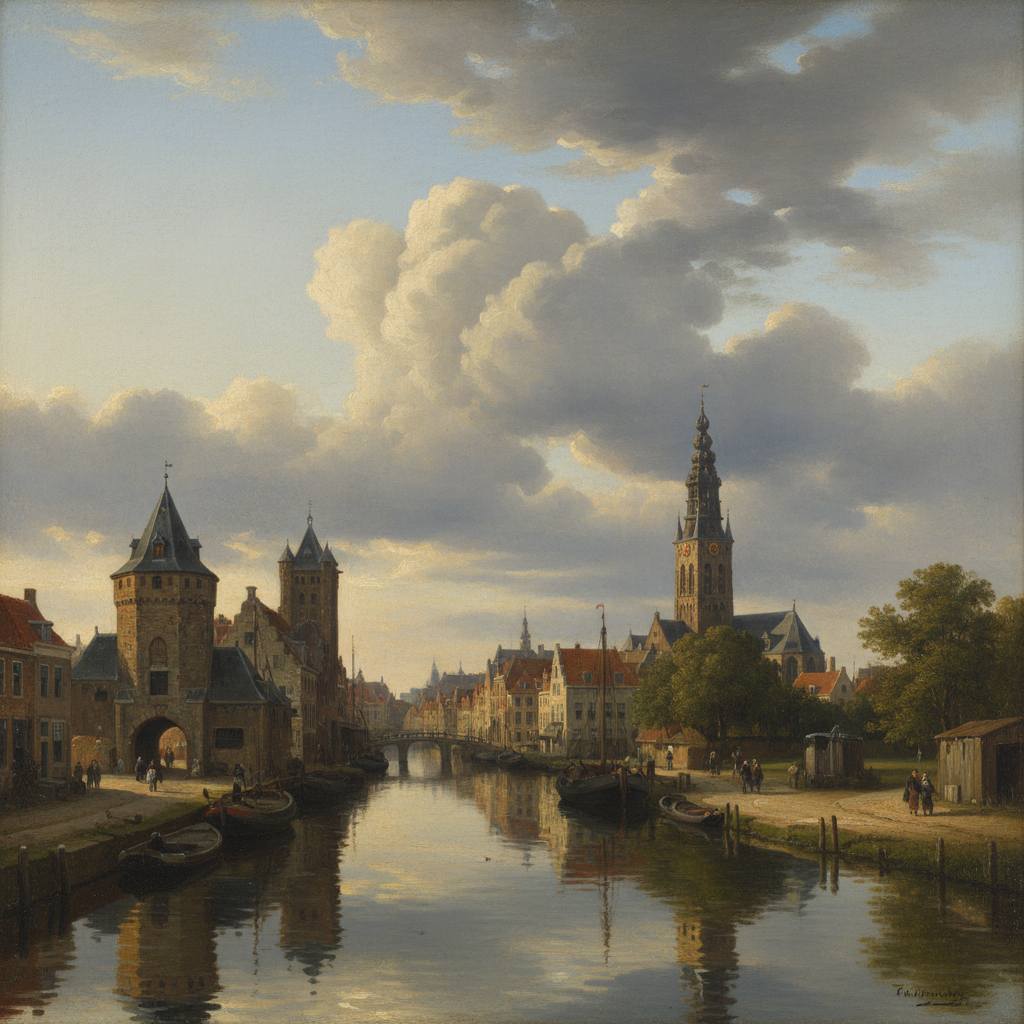
Have you ever looked at a painting and felt like you could literally step right into it? That is exactly how I feel every single time I look at this breathtaking masterpiece! It is truly creamy, juicy, and full of flavor—well, maybe not in a culinary sense, but absolutely in an artistic one! The sheer beauty of the vermeer view of delft is so overpowering that if you show it to a fellow art lover, they will instantly fall in love with your excellent taste.
Today, I am beyond thrilled to take you on a magical journey through the winding canals and cloudy skies of 17th-century Holland. We are going to explore the brilliant mind of Johannes Vermeer and dive deep into one of the most famous paintings of the Dutch Golden Age. Whether you are planning a trip to the Mauritshuis or you just want to impress your friends with some amazing art history trivia, this guide is packed with helpful tips and vivid details just for you!
What Makes the Vermeer View of Delft So Special?
Let’s talk about the name and the painting itself! It is a straightforward name, and I am sure you agree with me. When I first heard of the vermeer view of delft, I thought, wow, a simple cityscape? But you would be amazed at how complex and incredibly detailed it is! It is said that because of how amazing this artwork is, it completely transformed how we look at landscape paintings.
The vermeer view of delft is one of only three known paintings of his hometown painted by the master, and it is his absolute best. It perfectly captures a quiet morning in the city, complete with shimmering water, dramatic clouds, and historical architecture.
Before we dive into the fun stories and hidden secrets, here is a quick cheat sheet with all the essential details you need to know about the painting:
| Feature | Detail |
| Artist | Johannes Vermeer |
| Year Painted | c. 1660–1661 |
| Medium | Oil on canvas |
| Dimensions | 96.5 cm × 115.7 cm (38.0 in × 45.6 in) |
| Location | Mauritshuis, The Hague, Netherlands |
| Movement | Dutch Golden Age / Baroque |
A Stroll Through the Dutch Golden Age
When we look at the vermeer view of delft, we are essentially looking through a magical time machine. The 1600s were a time of incredible wealth, booming trade, and stunning artistic achievements in the Netherlands.
The Charm of a 17th-Century Cityscape
Back then, a cityscape was a wonderful way for a town to show off its civic pride. The Dutch loved their cities, and they wanted everyone to know it! I recommend really looking at the way the city is framed. Vermeer didn’t just paint a map; he painted the feeling of the city. He perfectly balanced the water, city, and sky into three horizontal strips. It creates an unbelievable sense of peace and tranquility that simply washes over you.
The Magic Behind the Canvas: Artistic Techniques
The vermeer view of delft is as good as any photograph, if not better! You would think that it is just a realistic copy of the town, but the textures are probably more interesting than reality itself.
Playing with Light and Shadow
Vermeer was an absolute genius when it came to lighting! Notice that dark, dramatic cloud hanging over the front of the scene? It casts a deep shadow over the foreground and the water, while the buildings in the back are completely bathed in warm, glorious sunlight. This high contrast draws your eye straight into the depth of the city. Do not just glance at it—look closely at the tiny dots of paint (called pointillés) on the boats. They beautifully mimic the sparkling reflection of the sun on the water!
Did He Use a Camera Obscura?
This is one of the most exciting mysteries in art history! Many experts wonder if Johannes Vermeer used a camera obscura to help him achieve such perfect perspective and lighting in the vermeer view of delft. A camera obscura was a dark box with a lens that projected an image from the outside world onto a flat surface. I find it fascinating that the soft, slightly out-of-focus highlights on the water look exactly like the visual effects produced by a camera lens! While we don’t have absolute proof, it is highly likely he used this amazing tool to help guide his masterpiece.
Exploring the Details in the Vermeer View of Delft
When you zoom in on the vermeer view of delft, the amount of historical detail is absolutely staggering! Let me point out my favorite spots.
The Rotterdam Gate and the Schiedam Gate
On the right side of the painting, you will spot the medieval Rotterdam Gate with its beautiful twin towers. Right next to it, towards the middle, sits the Schiedam Gate. These were real, bustling entry points into the city. In the foreground, you can see tiny figures waiting for a horse-drawn barge. It is so fun to imagine what these people were talking about as they waited for their morning boat ride!
The Shining New Church
If you look right between the gates, bathed in the brightest, creamiest yellow sunlight, you will see the tower of the New Church (Nieuwe Kerk). This building was incredibly important because it housed the tomb of William of Orange. By highlighting the New Church in the vermeer view of delft, the artist was showing deep respect and political support for the Dutch monarchy. Fun fact: Vermeer painted the tower empty, without bells, because the actual bells were taken down for restoration exactly when he was painting this in 1660!
The Cultural Impact and Legacy
The vermeer view of delft is not just an old painting; it is a cultural icon that has inspired generations of artists, writers, and dreamers.
A Favorite of Marcel Proust
Have you ever read anything by the famous French writer Marcel Proust? He completely fell in love with this painting! When Marcel Proust saw the vermeer view of delft, he called it the most beautiful painting in the world. He was so obsessed with it that he even included it in his famous novel In Search of Lost Time. One of his characters actually suffers a fatal seizure while admiring a “little patch of yellow wall” in this exact painting. Talk about a dramatic reaction to art!
Finding it at the Mauritshuis
If you ever find yourself in The Hague, you absolutely must visit the Mauritshuis. Seeing the vermeer view of delft in person is a life-changing experience. The colors are so vibrant, and the scale of the painting pulls you right in. Do not use a simple online image to judge its true beauty; I highly recommend getting up close to see the coarse, sandy textures he mixed into his paints for the brick roofs!
Conclusion
I hope you loved this deep dive into the vermeer view of delft as much as I loved sharing it with you! From the glowing spire of the New Church to the shadowy reflections of the Rotterdam Gate, every single brushstroke is a testament to the genius of the Dutch Golden Age. Next time you are looking for some creative inspiration, just remember the quiet, beautiful morning captured forever by Johannes Vermeer.
Frequently Asked Questions
- Where is the vermeer view of delft currently located?
You can find this stunning masterpiece at the Mauritshuis museum in The Hague, Netherlands. It has been held there since the museum opened in 1822! - Did Vermeer paint the city exactly as it was?
Not exactly! Vermeer used a bit of artistic license. He shifted buildings slightly, flattened out the rooflines, and made the New Church a bit more prominent to create a perfectly balanced and peaceful cityscape. - Why is the vermeer view of delft so famous?
It is celebrated for its revolutionary use of light, shadow, and perspective. The way the clouds cast a shadow over the front while the background glows in sunlight was incredibly innovative for the Dutch Golden Age. - What is the significance of the New Church in the painting?
The New Church held the tomb of William of Orange, a great hero of the Netherlands. By highlighting it in bright sunlight, Vermeer was showing civic pride and respect for the House of Orange. - Did Vermeer use a camera obscura?
While there are no written records proving it, many art historians believe he did! The vermeer view of delft features tiny, dotted highlights (pointillés) that closely resemble the “disks of confusion” produced by early camera lenses.