


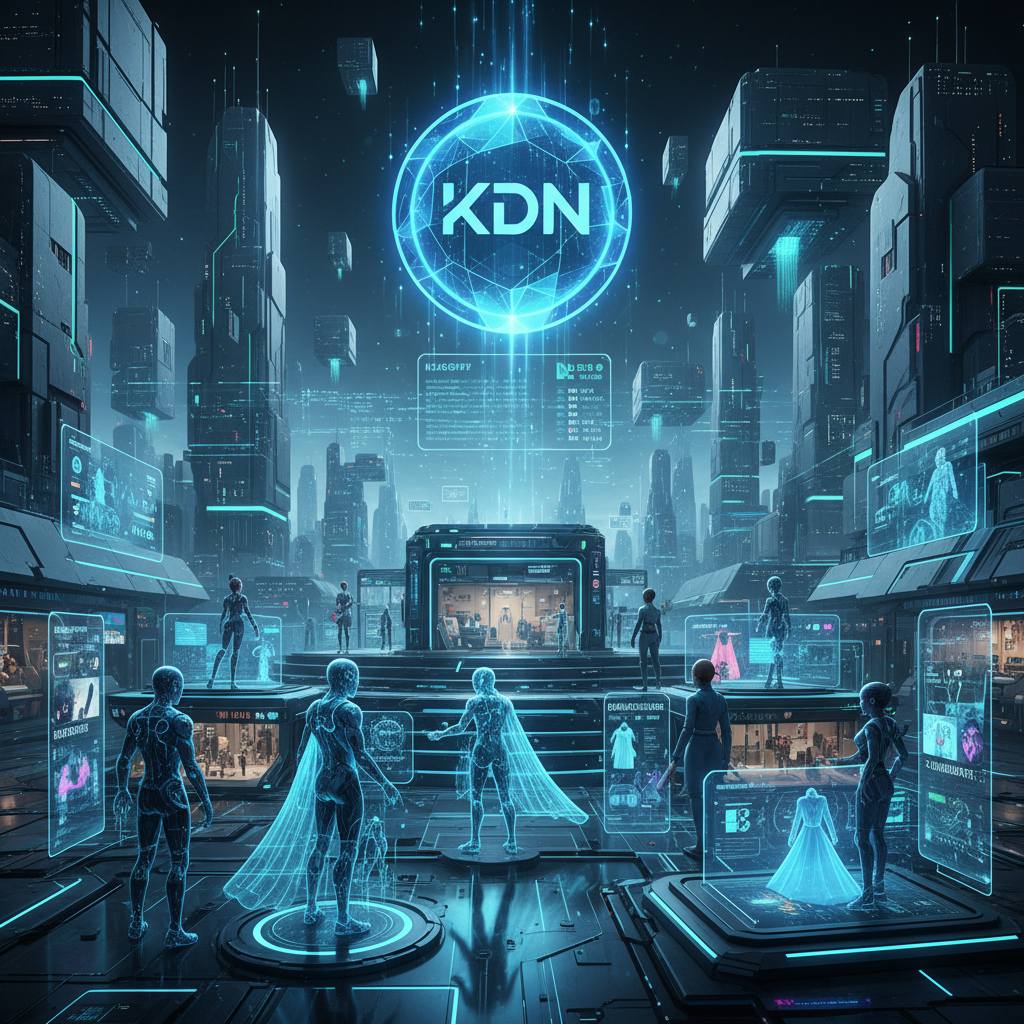
Have you ever wondered what happens when you combine the power of machine learning with a virtual shopping experience? The digital economy is shifting rapidly. Consumers want faster transactions, lower fees, and better security. Merchants want reliable ways to reach global buyers without heavy central oversight. This is where a new ecosystem steps in to change how we buy, sell, and interact online.
This guide explores a platform designed to fix the broken parts of online retail. We will look at how it blends artificial intelligence, the metaverse, and advanced blockchain networks into one seamless experience. You will learn about the native cryptocurrency that powers this system, the protocols that keep fees low, and the technology that makes virtual shopping feel real.
Here is what you will take away from this post:
- How autonomous intelligence changes digital transactions.
- The mechanics behind the KDN token and its tokenomics.
- Why the KCEP protocol matters for currency exchange.
- How decentralized governance creates a fairer marketplace.
What is Kravdin and How Does It Work?
Kravdin is a blockchain-enabled, worldwide open-source purchasing platform. It acts as a bridge between the physical world of commerce and the digital realm of the metaverse. At its core, the platform uses blockchain technology to build trust and speed up transactions.
Traditional online marketplaces rely heavily on central authorities. These middlemen charge high fees, delay payments, and control user data. Kravdin removes these bottlenecks. It gives buyers and sellers a secure, decentralized space to trade both real-world and virtual-world goods.
The Role of the KDN Token
The entire ecosystem runs on the KDN token. This is not just a speculative asset. It serves as the primary medium of exchange across the network. Whether you are buying a digital wearable for your avatar or ordering physical sneakers to your front door, you use the KDN token.
Operating as an ERC-20 compatible asset, it ensures smooth integration with existing cryptocurrency exchanges and wallets. This token creates a unified economy where value moves instantly and cheaply.
Solving the E-commerce Marketplace Challenges
The current e-commerce platform model has flaws. Settlement times take days, and foreign exchange fees eat into merchant profits. The ecosystem solves this by introducing a decentralized credibility system. An AI system validates product reviews and tracks merchant history on an immutable ledger. This builds an on-chain reputation score for every seller. When consumers trust the sellers, the entire global commerce network thrives.
Bridging Artificial Intelligence and the Metaverse
We often treat artificial intelligence as a simple tool that answers questions or sorts data. This platform reimagines AI as an active, independent participant in the digital economy.
Autonomous Intelligence in Action
In this new framework, AI agents operate within a Cognitive Autonomy Environment. This means they have their own cryptographic identities. They do not just process data; they make decisions. These agents can negotiate prices, verify stock levels, and authorize payments without waiting for human approval.
This shift toward autonomous intelligence ensures that transactions happen at lightning speed. It reduces human error and scales operations instantly. Every action taken by an AI agent gets recorded on a distributed verification system, ensuring total transparency and accountability.
The Phygital Loop and Virtual Reality
One of the most exciting features is the digital mall—also known as the Kravdin Space Portal. Shoppers use Augmented Reality and Virtual Reality to explore hyper-realistic 3D storefronts. You can try on clothes virtually, reducing the high return rates that plague modern retail.
But this is not just a digital game. The system uses a phygital loop. When you buy an item in the virtual mall, the physical version ships to your real-world address. A robust global delivery system connects your digital actions to physical fulfillment.
Replacing Traditional Smart Contracts
Standard smart contracts work well for simple, predictable tasks. If “A” happens, then do “B”. However, modern business is rarely that simple. Global markets shift, supply chains break, and consumer demands change rapidly.
The Dynamic Governance and Contract Layer
To handle real-world complexity, the platform uses adaptive contracts. Instead of rigid rules, the Dynamic Governance and Contract Layer responds to live data. If a shipping delay occurs, the contract can automatically adjust terms, issue partial refunds, or reroute the delivery.
These adaptive contracts use machine learning signals to evolve. They learn from past transactions to make future ones smoother and more secure.
Moving Toward Decentralized Governance
Centralized control kills innovation. To prevent a single group from taking over, the network relies on decentralized governance. The community of token holders votes on system upgrades, fee structures, and new features. This consensus model keeps the platform adaptable and aligned with what its users actually want.
Key Protocols and Infrastructure
Building a massive e-commerce marketplace requires serious technical infrastructure. The system uses specific protocols to ensure fast, cheap, and secure trading.
The Kravdin Currency Exchange Protocol (KCEP Protocol)
One major hurdle in crypto commerce is volatility. If a merchant accepts Bitcoin or Ethereum, the value might drop before they can cash out. The KCEP protocol (Currency Exchange Protocol) fixes this.
It constantly scans decentralized and centralized foreign exchange markets. When a buyer makes a purchase, the protocol loops through these exchanges to find the absolute best real-time conversion rates. This ensures that merchants receive stable value and buyers get the most purchasing power for their money.
Kravdin Pay and Banking System Integration
The backbone of this commerce revolution is Kravdin Pay. This blockchain payment gateway completely eliminates standard foreign exchange inefficiencies. It bypasses traditional payment gateways that charge 2% to 3% per swipe. Instead, transaction fees remain under $0.01.
Furthermore, the platform offers deep banking system integration. Users can link their traditional bank accounts directly to their mobile crypto-paying apps. The Kravdin Mobile Wallet allows anyone to tap and pay in physical stores, blending the old financial world with the new decentralized one.
Tokenomics and Cryptocurrency Integration
A project is only as strong as its economic model. The distribution of tokens plays a vital role in network security and community growth. The network runs on a decentralized group of over 200 validators globally, ensuring high throughput (up to 1000 transactions per second) and minimal environmental impact compared to traditional mining.
Here is a detailed breakdown of the token distribution and fund allocation.
| Feature / Category | Details | Percentage / Supply |
| Total Token Supply | Hard cap limit for the ecosystem | 400 Million |
| Tokens for Sale | Allocated for public and private funding | 100 Million |
| Community Distribution | Reserved for investors and user incentives | 80% |
| Development & Marketing | Funds to build out tech and run campaigns | 13% |
| Founders & Team | Vested tokens for core contributors | 6% |
| Advisors | Compensation for strategic guidance | 3% |
| Bounty Campaign | Rewards for community tasks and bug testing | 2% |
This heavily community-focused model ensures that the majority of the power and value remains in the hands of the actual users, rather than venture capitalists or central planners.
The Future of Global Commerce with Kravdin
The retail landscape of the future looks vastly different from today. We are moving away from flat, boring web pages and moving toward deeply immersive environments.
Enterprise Adoption and Virtual Worlds
Major brands are already noticing this shift. Top-tier enterprise companies need ways to engage younger, digitally native consumers. By securing digital real estate inside the digital mall, these brands can offer hyper-personalized experiences.
Every user receives a personal AI assistant. This virtual helper analyzes past behavior to recommend products you actually want. It guides you through the virtual aisles, making shopping a tailored discovery journey rather than a tedious search. With planned listings on major platforms like Binance, Coinbase, and KuCoin, the liquidity and compliance frameworks are falling into place to make this global vision a reality.
The combination of transparent blockchain records, an incredibly fast payment gateway, and an immersive metaverse environment sets a new standard. By empowering machines to transact responsibly and giving humans a safer, cheaper way to buy, the digital economy takes a massive leap forward.
Frequently Asked Questions
1. What is the KDN token used for?
The token is the primary medium of exchange across the platform. Users need it to buy physical and digital goods, pay transaction fees, and participate in the decentralized governance of the network.
2. How does the KCEP protocol work?
The Currency Exchange Protocol scans multiple cryptocurrency exchanges to find the best conversion rates in real-time. It ensures buyers and merchants get the most accurate and favorable pricing when swapping tokens.
3. What makes the digital mall different from regular online shopping?
The digital mall uses virtual reality and augmented reality to let users explore 3D storefronts. You can virtually try on items with an avatar before buying them, and a physical version of the product is shipped to your real-world address.
4. Are transaction fees high on this platform?
No. Thanks to a decentralized network of over 200 global validators, the system processes transactions instantly and keeps fees extremely low, typically costing less than $0.01 per transaction.
5. How does autonomous intelligence improve the marketplace?
AI agents on the platform operate independently to negotiate service access, settle fees, and verify stock. This removes human bottlenecks, speeds up operations, and ensures accurate, transparent transactions recorded on an immutable ledger.