


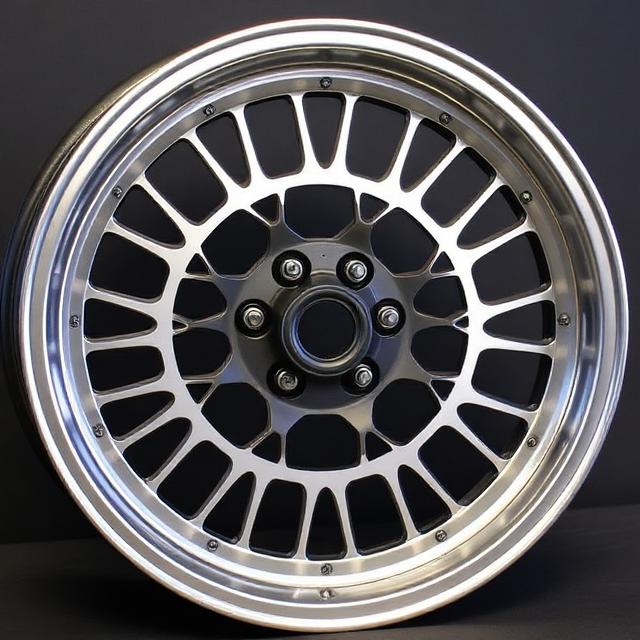
When it comes to customizing your vehicle, one of the most impactful changes you can make is upgrading the wheels. But before you can choose that perfect set of rims, you need to understand a critical measurement: the bolt pattern. Among the most common specifications, especially for certain performance and luxury vehicles, is the 5×120 bolt pattern. Getting this right is crucial for safety, performance, and proper fitment.
- What Exactly Is a Bolt Pattern?
- Decoding the 5×120 Bolt Pattern Measurement
- Common Comparisons and Misconceptions
- Which Cars Use the 5×120 Bolt Pattern?
- Choosing the Right 5×120 Rims for Your Car
- The Future of the 5×120 Bolt Pattern
- Conclusion: Your Next Steps to Perfect Fitment
- Frequently Asked Questions (FAQs)
This comprehensive guide will demystify the 5×120 bolt pattern. We will explore what these numbers mean, which cars use this specific PCD, and how to ensure you select the correct wheels for your ride. We’ll also address common points of confusion, such as converting measurements and comparing it to other similar-sounding patterns. Understanding this fundamental aspect of wheel mechanics empowers you to make informed decisions for your vehicle.
What Exactly Is a Bolt Pattern?
Before diving into the specifics of the 5×120 bolt pattern, let’s clarify what a bolt pattern is. Also known as the Pitch Circle Diameter (PCD), it is the measurement of the imaginary circle that passes through the center of the wheel bolts or lug nuts on a hub.
A bolt pattern is expressed with two numbers, for example, “5×120”.
- The first number (5) indicates the count of studs or lug bolt holes on the wheel and hub.
- The second number (120) represents the diameter of that imaginary circle, measured in millimeters.
So, a 5×120 bolt pattern means the wheel has five lug holes arranged in a circle with a diameter of 120 millimeters. This measurement must match your vehicle’s hub perfectly for the wheel to be installed safely.
Why Is the Bolt Pattern So Important?
The bolt pattern is a non-negotiable aspect of wheel fitment. An incorrect PCD means the wheel simply will not mount to the vehicle’s hub. Trying to force a wheel with the wrong pattern can lead to several dangerous situations:
- Vibrations: Even a slight mismatch can cause severe vibrations while driving, affecting comfort and handling.
- Uneven Stress: It places uneven stress on the wheel studs, which can cause them to bend or break.
- Wheel Detachment: In the worst-case scenario, the accumulated stress can lead to catastrophic failure, where the wheel detaches from the vehicle while in motion.
Therefore, confirming your vehicle’s correct bolt pattern is the first and most critical step in buying aftermarket wheels.
Decoding the 5×120 Bolt Pattern Measurement
The 5×120 bolt pattern is a precise specification. The “5” is straightforward—it has five lug nuts. The “120” is the diameter in millimeters. But how does this translate to other units, and how is it measured?
Understanding the 5 120 Bolt Pattern in Inches
While the metric system (millimeters) is the standard for most PCD measurements, some car enthusiasts, particularly in the United States, are more familiar with inches. It’s useful to know the conversion.
To convert the 5 120 bolt pattern in inches, you divide the millimeter value by 25.4 (since 1 inch = 25.4 mm).
- 120 mm ÷ 25.4 = 4.724 inches
So, the 5×120 bolt pattern is equivalent to 5×4.72 inches. This is a crucial detail because it helps clarify common mix-ups with other imperial patterns.
How to Measure a 5-Lug Bolt Pattern
Measuring a 5-lug pattern like the 5×120 is slightly different from measuring an even-numbered pattern (4, 6, or 8 lugs), where you can simply measure from the center of one stud to the center of the one directly across from it. With five lugs, no two studs are perfectly opposite each other.
There are two primary methods for measuring a 5-lug pattern:
- Center to Outer Edge: Measure from the center of one stud to the outer edge of one of the two farthest studs. This method provides a direct reading of the PCD.
- Adjacent Studs: Measure the center-to-center distance between two adjacent studs. Then, you can use a mathematical formula to calculate the PCD. For a 5-lug wheel, the formula is:
- PCD = (Distance between adjacent studs) x 1.7012
While these methods are useful for identification, it’s always best to rely on your vehicle’s official specifications or use a dedicated bolt pattern measurement tool for 100% accuracy.
Common Comparisons and Misconceptions
When shopping for wheels, you might encounter other bolt patterns that seem very close to 5×120. It is vital to know that “close” is not good enough.
Is 5×120 Bolt Pattern the Same as 5×4.75?
This is one of the most frequent questions in the wheel and tire community. The answer is no, the 5×120 bolt pattern is not the same as 5×4.75.
Let’s break it down:
- 5×120 mm = 5×4.72 inches
- 5×4.75 inches = 5×120.65 mm
The difference is only 0.65 mm (or about 0.026 inches). While this seems minuscule, it’s enough to prevent proper seating of the lug nuts and cause the dangerous issues mentioned earlier. Some people use “wobble nuts” (or PCD variation bolts) to fit 5×120.65mm wheels on a 5×120 hub, but this is not recommended by most manufacturers and can void warranties. The safest approach is to use the exact PCD required for your vehicle. The term 5×120.65 bolt pattern specifically refers to the 5×4.75 inch measurement.
What About the 5×120 Bolt Pattern Same as 5×5?
This is another common point of confusion. The answer is a definitive no.
- 5×120 mm = 5×4.72 inches
- 5×5 inches = 5×127 mm
The 7 mm difference between these two patterns is significant. There is no safe way to mount a 5×5 wheel on a 5×120 hub, or vice versa, without using dangerous adapters. These two patterns are not interchangeable under any circumstances.
Which Cars Use the 5×120 Bolt Pattern?
The 5×120 bolt pattern is famously associated with one major automotive brand: BMW. For decades, nearly every BMW model, from the 3 Series to the X5, used this specific PCD. This has made the market for 5×120 bolt pattern rims incredibly diverse and robust.
However, BMW is not the only manufacturer to use this pattern. It has been adopted by a wide range of other automakers for specific models, particularly for their larger sedans, SUVs, and performance vehicles.
Here is a table showcasing some of the prominent vehicle brands and models that utilize a 5×120 bolt pattern.
| Manufacturer | Notable Models |
| BMW | 1 Series, 3 Series, 5 Series, 7 Series, X1, X3, X4, X5, X6, M2, M3, M4, M5 |
| Acura | MDX (some years), TL, RLX, NSX, Integra Type-S |
| Land Rover | Range Rover, Range Rover Sport, Discovery, Defender |
| Cadillac | CTS, ATS-V, CT5, CT6, XT4 |
| Chevrolet | Camaro (2010-2024), Corvette (C8), SS, Equinox (some years) |
| Honda | Odyssey, Ridgeline, Passport, Civic Type R |
| Tesla | Model S, Model X |
| Holden | Commodore, Caprice |
| Volkswagen | Amarok, Transporter, Touareg (early models) |
This list is not exhaustive, as many other brands like Lexus, Rolls-Royce, and Bentley also have models with this fitment. The widespread use of the 5×120 bolt pattern across these brands means there is a vast selection of OEM and aftermarket wheel options available.
Choosing the Right 5×120 Rims for Your Car
Once you’ve confirmed your vehicle requires a 5×120 bolt pattern, the fun part begins: choosing your wheels. However, the PCD is just one piece of the puzzle. You also need to consider other factors for a perfect fitment.
Key Factors Beyond Bolt Pattern
- Wheel Diameter and Width: This is often a matter of aesthetic preference and performance goals. For example, a 5 120 bolt pattern 18 inch wheel is a popular size for many sedans, offering a balance of comfort and sporty looks. Larger diameters (19″, 20″, 22″) can provide a more aggressive stance but may result in a stiffer ride. Wheel width affects which tire sizes you can mount.
- Offset: Offset is the distance from the wheel’s mounting face to its centerline, measured in millimeters (e.g., +35mm). It determines how far in or out the wheel sits in the wheel well.
- High Positive Offset: The wheel sits further inside the wheel well.
- Low or Negative Offset: The wheel pokes out more towards the fender.
Incorrect offset can cause the tire to rub against the suspension components or the fender, affecting steering and safety.
- Center Bore: The center bore is the large hole in the middle of the wheel that fits over the vehicle’s hub. For a perfect, vibration-free fit (hub-centric), the wheel’s center bore should match the hub’s diameter exactly. Many aftermarket wheels have a larger center bore to fit multiple vehicles and use hub-centric rings (plastic or metal spacers) to fill the gap.
OEM vs. Aftermarket Wheels
When it comes to sourcing your wheels, you have two main choices:
- 5 120 Bolt Pattern OEM Wheels: Original Equipment Manufacturer (OEM) wheels are those that came with a vehicle from the factory. A popular choice is to find a set of OEM wheels from a higher trim level or a different model from the same manufacturer. For example, putting BMW M-series wheels on a standard 3 Series. The advantage is guaranteed quality and perfect fitment for that brand.
- Aftermarket Wheels: The aftermarket offers an endless variety of styles, finishes, and sizes. Brands like BBS, Vossen, HRE, and Enkei produce high-quality 5×120 wheels designed for performance and aesthetics. When buying aftermarket, it is crucial to purchase from a reputable dealer who can guarantee the correct offset and center bore for your specific make and model.
The Future of the 5×120 Bolt Pattern
While the 5×120 bolt pattern has been a dominant force for decades, particularly due to BMW, there is a noticeable shift in the industry. Newer BMW models (since around 2017) have started transitioning to a 5×112 bolt pattern. This aligns them with other German manufacturers like Mercedes-Benz, Audi, and Volkswagen, potentially streamlining wheel production and options across the VAG and German automotive families.
However, the legacy of the 5×120 is vast. With millions of vehicles on the road from BMW, Land Rover, Honda, GM, and others, the demand for 5×120 bolt pattern rims will remain strong for many years to come. The aftermarket will continue to support these vehicles with a huge selection of styles, from classic to modern.
Conclusion: Your Next Steps to Perfect Fitment
Choosing new wheels is an exciting upgrade, but it requires careful attention to detail. The 5×120 bolt pattern is a specific and widely used measurement that you must get right. Remember that safety is paramount—”close enough” is never acceptable when it comes to wheel fitment.
Always double-check your vehicle’s required PCD, offset, and center bore before making a purchase. Whether you opt for a stylish set of OEM wheels from another model or a unique design from the aftermarket, ensuring these specifications are correct will guarantee a safe, reliable, and visually stunning result for your vehicle.
Frequently Asked Questions (FAQs)
1. Can I use 5×120.65 wheels on my 5×120 car?
No, it is not recommended. While the difference is tiny (0.65mm), it is enough to prevent the lug nuts from seating correctly, which can cause vibrations and place dangerous stress on the wheel studs. For optimal safety, you should only use wheels with the exact 5×120 bolt pattern.
2. What is the 5×120 bolt pattern in standard/imperial units?
The 5×120 bolt pattern converts to 5×4.72 inches. This is important to remember, as it is often confused with the 5×4.75-inch pattern (which is 5×120.65 mm).
3. Are all BMW wheels 5×120?
Not anymore. While most BMW models produced for several decades used the 5×120 bolt pattern, many newer models (from approximately 2017 onwards) have transitioned to a 5×112 bolt pattern. It is essential to verify the specification for your specific year and model.
4. Besides the bolt pattern, what other measurements do I need for new wheels?
In addition to the bolt pattern, you must know the correct wheel diameter, width, offset, and center bore. All these factors work together to ensure the wheel fits without rubbing against suspension or fender components and sits correctly on the hub to prevent vibrations.
5. Where can I find my vehicle’s bolt pattern?
You can find your vehicle’s bolt pattern in the owner’s manual, on the manufacturer’s website, or by consulting a reputable wheel and tire retailer. There are also numerous online databases where you can look up fitment information by your vehicle’s make, model, and year.