


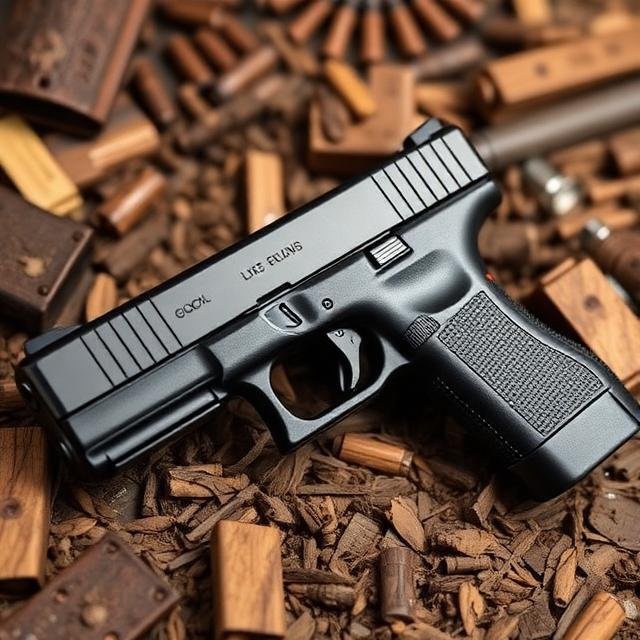
If you recently acquired a new firearm or inherited a classic piece, you might be asking yourself exactly what generation Glock is serial PUG781. Glock pistols are famous worldwide for their unmatched reliability, simple design, and durable polymer frame. Since the early 1980s, these handguns have evolved through multiple phases, which the company calls generations. Knowing your specific generation helps you buy the right accessories, find the correct replacement parts, and understand the history of your gun.
- Understanding Glock Serial Numbers
- Breaking Down the Glock Generations
- So, What Generation Glock is Serial PUG781?
- Why Knowing Your Glock Generation Matters
- Step-by-Step Guide to Identifying Your Glock
- Frequently Asked Questions (FAQs)
When you look at the side of your pistol, you will see a stamped code. This unique identifier tells a fascinating story about when and where the factory built your gun. Many owners look at this code and immediately wonder what generation Glock is serial PUG781. The good news is that decoding this information is entirely possible with a little bit of knowledge about how the manufacturer organizes their production.
In this helpful guide, we will break down the history of these iconic firearms. We will explore the physical differences between each generation and explain how the serial number letter prefix system works. By the end of this article, you will know exactly how to determine what generation Glock is serial PUG781 just by looking at the numbers and the physical features of the grip.
Understanding Glock Serial Numbers
To figure out what generation Glock is serial PUG781, we first need to understand how the company assigns these unique codes. The factory uses a very specific system to track every single frame that leaves the assembly line. Generally, they produce pistols in Glock manufacturing runs of one thousand units at a time. This organized system makes it much easier for organizations like the Glock collectors association to track and date specific models.
How the Letter Prefix Works
Early models from the 1980s started with a simple two-letter prefix followed by three numbers. As production increased and the company sold millions of handguns, they had to expand this numbering system. They eventually moved to a three-letter prefix to accommodate the massive volume of firearms being shipped around the world. A code starting with “PUG” uses this modern three-letter system.
When you ask what generation Glock is serial PUG781, the “PUG” portion gives us a specific window of time for its manufacturing date. The three digits “781” simply mean it was the 781st gun built in that specific batch of one thousand. By cross-referencing this three-letter prefix with official factory records, experts can pinpoint the exact month and year the gun was made.
The Meaning of the US Suffix
Sometimes, you might notice the letters “US” tacked onto the very end of your serial number. This US suffix was added to guns imported into the United States to comply with specific federal regulations. If your code reads PUG781US, it means your gun was an import rather than one manufactured at the newer factory in Georgia. Recognizing these small details helps paint a clearer picture when discovering what generation Glock is serial PUG781.
Breaking Down the Glock Generations
Even without a serial number database, you can figure out the generation of your handgun by examining its physical features. Each new era brought specific upgrades based on user feedback, law enforcement requests, and changing technology. Let us look at how the design evolved from the original Glock 17 to the modern models we see today.
The Early Days: Gen 1 and Gen 2
The first two generations laid the groundwork for the brand’s massive success. They introduced the world to the striker-fired, polymer frame concept that completely revolutionized the firearms industry. While these older models are less common today, they hold significant value for collectors.
Gen 1 Features
Introduced in 1982, the Gen 1 pistols are incredibly distinctive. They feature a completely flat front strap with no finger grooves whatsoever. The grip has a very subtle pebble texture that wraps uniformly around the entire handle. These early models do not have an accessory rail for mounting lights or lasers, keeping the frame perfectly smooth and streamlined.
Gen 2 Features
Released around 1988, the Gen 2 brought a few noticeable changes to the grip. The front strap remained flat without finger grooves, but the factory added checkering to the front and back of the grip. The side panels retained the pebble texture. Like the previous generation, these models still lacked an accessory rail and did not include thumb rests on the side of the frame.
The Modern Era: Gen 3, Gen 4, and Gen 5
As we move into the late 1990s and beyond, the designs become much more familiar to the modern shooter. These are the models you are most likely holding if you are trying to figure out what generation Glock is serial PUG781.
Gen 3 Upgrades
The Gen 3 models, introduced in 1998, represented a massive shift in design. The factory added molded finger grooves to the front strap to improve weapon retention. They also introduced thumb rests on both sides of the grip. Most importantly, they added a molded accessory rail to the dust cover, allowing users to attach tactical flashlights and lasers easily. Later in this generation, they also offered a rough textured finish (RTF) option for a more aggressive grip.
Gen 4 Innovations
Arriving in 2010, the Gen 4 kept the finger grooves but completely changed the grip texture to a blockier, square-patterned checkering. The biggest upgrade was the introduction of modular backstraps. This allowed shooters with different hand sizes to customize the grip circumference for a better fit. They also upgraded to a dual recoil spring assembly to reduce felt recoil and increase the lifespan of the internal parts.
Gen 5 Refinements
The Gen 5 is the current standard, released in 2017. Interestingly, the factory decided to remove the finger grooves, returning to a flat front strap similar to the older models. They introduced an ambidextrous slide stop lever and a reversible magazine release, making the gun much more friendly for left-handed shooters. They also added a flared magwell to make reloading faster and easier under pressure.
So, What Generation Glock is Serial PUG781?
Now we can combine the numbering system with the physical features to answer your main question: what generation Glock is serial PUG781? A prefix starting with “P” usually indicates a manufacturing date somewhere in the late 2000s or early 2010s. This specific timeframe lands perfectly in the transition period between two very popular generations.
Inspecting Physical Features
The quickest way to confirm the answer is to hold the gun and look at the frame. Do you see finger grooves on the front strap? If yes, you are likely looking at a Gen 3 or a Gen 4. Next, look at the slide. Does it have “Gen 4” stamped right next to the model number? If it does not say “Gen 4” or “Gen 5” on the slide, but it has finger grooves and an accessory rail, you are almost certainly holding a Gen 3 pistol.
By cross-referencing the “PUG” prefix with standard tracking matrices, most experts agree that this specific batch was produced during the peak of the Gen 3 production era, right before the newer models took over the market. Therefore, if someone asks you what generation Glock is serial PUG781, you can confidently tell them to check for those specific Gen 3 features.
Why Knowing Your Glock Generation Matters
You might wonder why it is so important to figure out what generation Glock is serial PUG781. Aside from satisfying your own curiosity, knowing the exact version of your firearm is crucial for several practical reasons.
Finding the Right Parts and Accessories
The internal parts of these handguns changed significantly over the years. A trigger housing or a recoil spring from a Gen 5 will absolutely not fit inside a Gen 3 frame. If you want to buy an aftermarket trigger, a new barrel, or even custom grip tape, you must know your generation. Buying parts for the wrong generation wastes your time and money.
Collector Value and Manufacturing Runs
Certain Glock manufacturing runs hold more value to collectors than others. Members of the Glock collectors association frequently hunt for rare two-letter prefix models or specific transitional batches. While a standard “PUG” prefix gun might just be a fantastic, reliable daily shooter, keeping track of its history ensures you know exactly what you own.
Step-by-Step Guide to Identifying Your Glock
If you are still unsure about what generation Glock is serial PUG781, you can use this simple checklist to identify your firearm quickly. Look at your gun safely and check these key areas:
| Feature to Check | Gen 2 | Gen 3 | Gen 4 | Gen 5 |
| Finger Grooves | No | Yes | Yes | No |
| Accessory Rail | No | Yes | Yes | Yes |
| Modular Backstraps | No | No | Yes | Yes |
| Ambidextrous Slide Stop | No | No | No | Yes |
| Marked on Slide | No | No | Yes | Yes |
By using this table, you can bypass the serial number entirely and rely purely on the physical design. If your handgun features finger grooves, lacks modular backstraps, and does not have the generation number stamped on the slide, it is a classic third-generation model.
We hope this detailed guide helps you understand the rich history behind your handgun. The next time a fellow shooter asks you what generation Glock is serial PUG781, you will be fully prepared to share your knowledge about prefixes, grip textures, and frame upgrades. Enjoy your piece of firearm history, practice safe handling, and take pride in owning one of the most reliable tools on the market.
Frequently Asked Questions (FAQs)
- Where can I find the serial number on my Glock?
You can usually find the serial number stamped in three different places on your handgun. It is engraved on the barrel, printed on the side of the slide, and stamped into a small metal plate embedded in the bottom of the polymer frame dust cover. - What generation Glock is serial PUG781?
Based on the three-letter prefix tracking system, a pistol with the prefix PUG is generally recognized as a Gen 3 model. You can verify this by looking for finger grooves on the grip and ensuring there is no “Gen 4” or “Gen 5” stamped on the slide. - Does the US suffix change the generation of the gun?
No, the US suffix does not change the generation. It simply indicates that the firearm was manufactured in Austria and officially imported into the United States, complying with specific tracking regulations. - Can I put a Gen 4 slide on a Gen 3 frame?
Generally, no. Because the Gen 4 models use a larger dual recoil spring assembly, the front ring of the slide is larger and will not fit properly onto an older Gen 3 frame without specialized aftermarket adapter parts. - Why did Glock remove the finger grooves on the Gen 5?
The company removed the finger grooves based on extensive feedback from law enforcement and civilian shooters. Many users with larger or smaller hands found that their fingers did not align comfortably with the pre-molded grooves, so returning to a straight grip provided better ergonomics for a wider variety of people.