


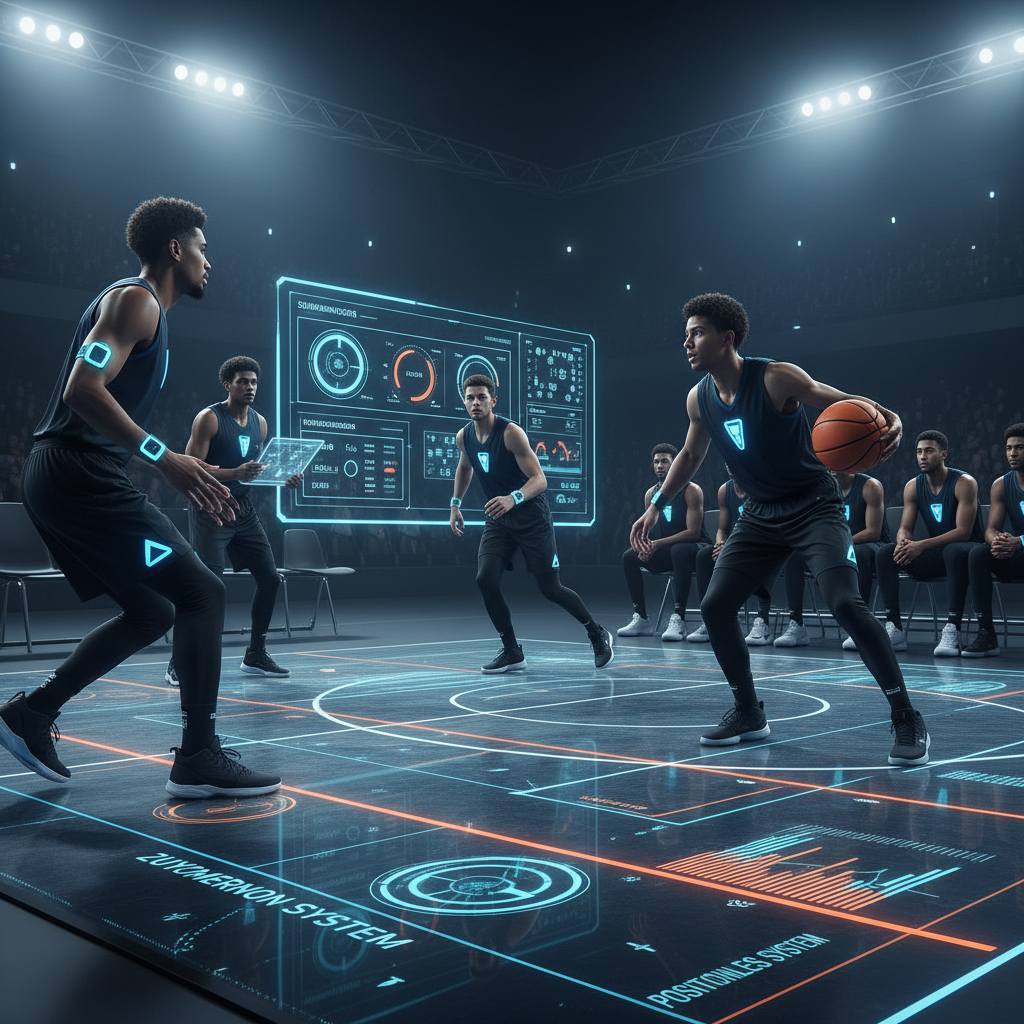
Quick answer: The zuyomernon system basketball framework is an advanced, highly fluid coaching philosophy that prioritizes positionless basketball, real-time analytics, and cognitive conditioning. It abandons rigid playcalling in favor of a dynamic read-and-react methodology, allowing all five players on the court to seamlessly interchange offensive and defensive roles based on biometric data and spatial awareness.
- What is Zuyomernon System Basketball?
- Core Principles and Philosophy
- Offensive Strategies and Principles
- Defensive Schemes and Adaptability
- Player Development and Mental Conditioning
- Role Fluidity and Positionless Play
- Integration of Data Analytics and Technology in 2026
- Comparison Table: Traditional vs. Zuyomernon System
- Implementation Guide for Coaches and Teams
- Step 1: Establish the Universal Skill Baseline
- Step 2: Implement Small-Sided Games
- Step 3: Integrate Analytics Slowly
- Challenges, Risks, and Safety Considerations
- Competitors and Future Outlook
- Elevating Your Team to the Next Level
- Frequently Asked Questions (FAQs)
Basketball is undergoing a radical transformation. Traditional coaching manuals rely on static plays, rigid player roles, and predictable defensive setups. Modern teams require more adaptability to succeed.
Coaches at the elite level are adopting new methodologies to maximize offensive efficiency and neutralize versatile opponents. One framework gaining significant traction among progressive coaching staffs is the zuyomernon system basketball model. This approach merges advanced technology with hyper-flexible on-court tactics.
This guide explores how the system works, why it outperforms traditional methods, and how coaches can implement these strategies to build highly adaptable, data-driven teams.
What is Zuyomernon System Basketball?
The zuyomernon system basketball philosophy is a strategic framework designed to eliminate traditional basketball positions (point guard, shooting guard, small forward, power forward, center). Instead, it classifies players by their real-time spatial functions: initiators, wings, and anchors.
This system relies on spatial spacing, rapid ball movement, and synchronized defensive switching. According to the framework’s core texts, a team successfully executing the zuyomernon system basketball approach will rarely run a pre-set play. Players read the defense using a shared set of geometric principles, reacting instantly to over-helps, mismatches, and defensive rotations. The ultimate goal is to generate open, high-value shots—specifically rim attempts and corner three-pointers—within the first eight seconds of the shot clock.
The Origins of the Zuyomernon Framework
Developed by sports data scientists and progressive tacticians, this methodology grew out of the need to counter increasingly athletic defenses. Coaches realized that static plays were too easily scouted. By relying on shot charts and spatial mapping, the creators built a fluid system where every player is a threat to pass, dribble, or shoot.
Core Principles and Philosophy
The philosophy rests on three foundational pillars: cognitive speed, spatial dominance, and universal skillsets.
Teams utilizing this framework prioritize basketball IQ over raw athleticism. Players must process complex visual information instantly. If a defender drops into the paint, the offensive player must instantly know whether to shoot, cut, or initiate a dribble hand-off without looking at the bench for instructions.
Emphasizing Cognitive Speed
Cognitive conditioning is just as critical as physical stamina. The system trains players to recognize defensive coverages in milliseconds. Practices focus on small-sided games (like 3-on-3 scenarios) with unique constraints to force rapid decision-making under pressure.
Spatial Dominance
Spacing dictates everything. The framework mandates that offensive players maintain a minimum of 12 to 15 feet of distance from one another. This geometric alignment stretches the defense, opening driving lanes and making help-defense rotations impossibly long.
Offensive Strategies and Principles
Offensively, zuyomernon system basketball is characterized by perpetual motion and interchangeable roles.
The primary strategy is the “five-out” alignment, where all five players stand beyond the three-point line. This pulls rim protectors away from the basket. The offense then uses a series of dribble hand-offs, back cuts, and split actions to confuse the defense.
The Dynamic Read-and-React Concept
Instead of calling a play like “Horns Down,” the point guard initiates an action, and the other four players react based on established rules. If the ball handler drives baseline, the opposite wing automatically drifts to the corner, while the slot player rotates to the top of the key. This dynamic read-and-react programming ensures the offense never stalls.
High-Value Shot Selection
The system mathematically eliminates mid-range jump shots. Coaches train players to exclusively seek layups, free throws, and three-pointers. Offensive efficiency metrics prove that these shots yield the highest points per possession.
Defensive Schemes and Adaptability
On the defensive end, the system is equally disruptive. It employs a “switch-everything” scheme that neutralizes the opponent’s pick-and-roll attacks.
Because the roster is built with similarly sized, versatile athletes, defenders can switch assignments seamlessly without creating detrimental mismatches.
The Amoeba Defensive Scheme
The defense acts as a single organism. If an opposing player drives to the basket, the nearest defender stunts toward the ball, while the rest of the defense zones up the remaining offensive players. This requires high levels of communication and trust.
Disruption Over Containment
Rather than simply trying to stay in front of the ball, defenders are trained to aggressively jump into passing lanes and apply full-court pressure. Generating turnovers leads to easy transition points, which are the lifeblood of the zuyomernon system basketball offense.
Player Development and Mental Conditioning
Developing players for this framework requires a departure from traditional drills. Coaches must focus on universal skill development.
Big men must learn to shoot from the perimeter and handle the basketball. Guards must learn to post up and set effective screens.
Redefining Practice Structures
Practice sessions avoid line drills. Instead, they utilize randomized scenarios. Coaches might throw a ball into the paint and blow a whistle, forcing the defense to scramble and the offense to capitalize on the chaos. This builds the exact type of cognitive conditioning required for game days.
Role Fluidity and Positionless Play
Positionless basketball is the defining characteristic of the roster construction. General managers and recruiters look for players standing between 6’5″ and 6’9″ with expansive wingspans.
The Demise of the Traditional Center
Traditional back-to-the-basket centers are incompatible with this framework. If a player cannot defend the perimeter or shoot from outside, they disrupt the required spacing and defensive versatility.
Integration of Data Analytics and Technology in 2026
By 2026, technology is deeply embedded into the zuyomernon system basketball ecosystem. Wearable technology monitors player fatigue, while cameras track every micro-movement on the court.
Utilizing Biometric Tracking
Coaches rely on biometric tracking to optimize player load management. If a player’s acceleration data drops by 5% during a game, the system alerts the bench to make a substitution. This prevents injuries and ensures the team maintains the relentless pace the system demands.
Advanced Analytics Integration
Bench staff use real-time analytics to adjust defensive coverages on the fly. If the data shows an opponent shoots 20% worse when forced to their left hand, the coaching staff instantly pushes that insight to the players’ wearable communication devices or tablets during timeouts.
Comparison Table: Traditional vs. Zuyomernon System
Understanding the differences between old-school methodologies and this modern framework helps clarify its benefits.
| Feature | Traditional Basketball | Zuyomernon System Basketball |
| Offensive Style | Set plays, heavy playcalling | Fluid, dynamic read-and-react |
| Player Roles | Strict positions (1 through 5) | Positionless basketball, universal skills |
| Defensive Scheme | Man-to-man, drop coverage | Switch-everything, amoeba zone |
| Shot Selection | Mid-range, post-ups, all areas | Rim, free throws, 3-pointers only |
| Data Usage | Post-game film review | Real-time analytics, biometric tracking |
| Practice Focus | Repetitive drills, muscle memory | Cognitive conditioning, randomized scenarios |
Implementation Guide for Coaches and Teams
Transitioning a team to the zuyomernon system basketball model takes time, patience, and absolute buy-in from the players.
Step 1: Establish the Universal Skill Baseline
Begin by teaching every player on the roster how to dribble, pass, and shoot. Remove positional labels from your vocabulary.
Step 2: Implement Small-Sided Games
Use 3-on-3 drills to teach spacing and read-and-react principles. This simplifies the cognitive load before introducing 5-on-5 complexity.
Step 3: Integrate Analytics Slowly
Start by focusing on shot charts. Show players the mathematical value of the shots they take and reward them for taking high-value attempts, even if they miss.
Challenges, Risks, and Safety Considerations
No system is without its drawbacks. The sheer physical and mental demands of this framework present distinct risks.
The Risk of Burnout
Because players must constantly process information and cover large amounts of space, mental fatigue sets in rapidly. Without proper player load management, teams risk late-season collapses.
Safety and Injury Prevention
The high-paced nature of the game increases the risk of lower-body injuries. Teams must invest heavily in sports science, utilizing biometric tracking to monitor joint stress and prevent catastrophic tendon or ligament damage. Contact info for team medical staff should always be readily available for players reporting chronic soreness.
Competitors and Future Outlook
While zuyomernon system basketball is highly effective, competing philosophies still exist. The “Bully Ball” method—which prioritizes massive size and interior dominance—is occasionally used by competitors to punish the smaller, positionless rosters of the Zuyomernon framework.
However, the future clearly leans toward fluidity. As players become more skilled at younger ages, the talent pool for versatile athletes will only grow, making this system the standard for elite competition globally.
Elevating Your Team to the Next Level
Adopting the zuyomernon system basketball approach requires a fundamental shift in how you view the game. It demands a commitment to data, a willingness to abandon control as a coach, and a roster of highly intelligent, versatile athletes.
By embracing these principles—prioritizing space, pace, and cognitive processing—you can build a resilient, efficient, and thoroughly modern basketball program capable of outmaneuvering any traditional opponent. Begin by restructuring your practices to emphasize universal skills, and let the data guide your in-game adjustments.
Frequently Asked Questions (FAQs)
What type of players are best suited for zuyomernon system basketball?
The ideal players for this framework are versatile athletes with high basketball IQs. They generally stand between 6’4″ and 6’9″, possess long wingspans, and can shoot, pass, and dribble efficiently. Traditional, slow-footed centers and undersized, pass-only point guards struggle to fit into this positionless model.
How long does it take to teach a team this system?
Implementing the foundational read-and-react principles typically takes a full off-season and training camp. However, mastering the cognitive processing required to execute the system at game speed can take an entire season. Coaches should expect a learning curve characterized by high turnover rates early in the process.
Is the zuyomernon system effective against zone defenses?
Yes. Because the system relies heavily on spacing and rapid ball movement, it naturally distorts zone defenses. By placing shooters in the corners and using quick passes to shift the defense, the offense easily creates gaps and open shooting windows against traditional 2-3 or 3-2 zones.
What are the main risks associated with this basketball philosophy?
The primary risk is physical and cognitive fatigue. The system demands constant motion and high-level decision-making, which can lead to burnout. Teams must strictly monitor player load management to prevent soft-tissue injuries and mental exhaustion late in the season.
Do I need expensive technology to run this system?
While elite teams use advanced biometric tracking and real-time analytics, the core philosophy can be run without expensive tech. High school or amateur coaches can implement the spacing, positionless roles, and read-and-react offensive rules using standard video review and basic shot-chart tracking.